
Best Bird Bath Materials: Which to Choose (and Avoid)
Quick answer: The best bird bath materials are glazed ceramic, natural stone and concrete, which are heavy, stable and easy to clean. Metal and dark plastic can overheat, and thin resin can crack in frost. Choose a shallow, rough-bottomed bowl of one to two inches deep in a natural color.
The material of your bird bath affects how well it holds water, how easy it is to clean, how safe it feels to birds and how long it lasts outdoors. Here is how the common materials compare so you can pick the right one.
Bird bath materials compared
Concrete
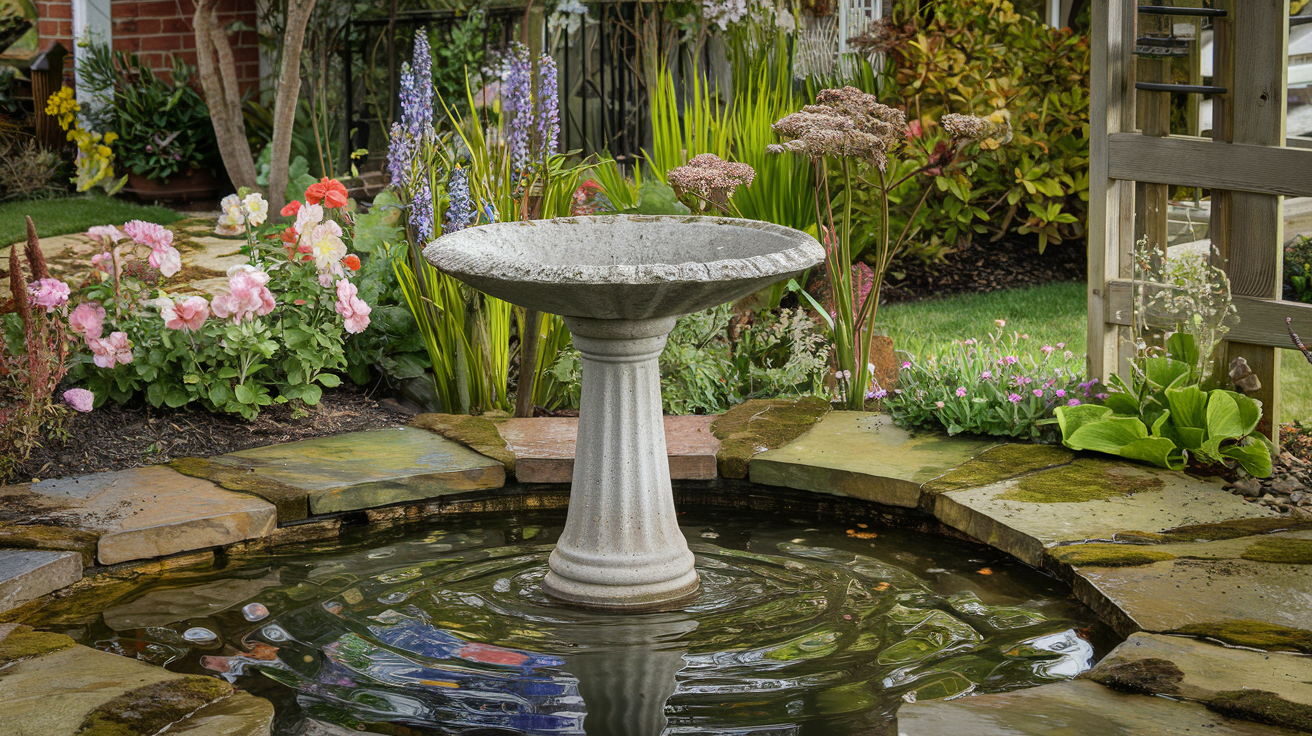
Heavy, stable and naturally colored, concrete is a classic for good reason. It stays put in wind, has a rough surface birds grip easily, and lasts for years. It can crack in hard frost if water is left to freeze, and it needs sealing if you paint it. See our guides on painting a concrete bird bath and safe paints for bird baths.
Glazed ceramic
Attractive, smooth and very easy to wipe clean, glazed ceramic resists algae well. It is more fragile than concrete and can crack in freezing weather, so bring it in for winter in cold climates.
Natural stone
Durable, heavy and beautiful, stone weathers gracefully and feels natural to birds. It is the most expensive option and hard to move once placed.
Metal
Copper and steel baths look striking, but metal heats up quickly in sun and can make the water too warm. Keep metal baths in shade and refresh the water often.
Plastic and resin
Light and cheap, plastic and resin baths are easy to move and frost-tolerant if flexible, but they blow over in wind, scratch, and dark colors overheat. Weigh the base with stones and choose lighter, natural tones.
Glass
Glass dishes and hanging baths are decorative and easy to clean, but they are fragile, can be slippery for birds, and reflections may startle them. Add a few pebbles for grip.
What to look for whatever the material
- Shallow bowl: one to two inches deep, deeper only at the center.
- Rough or textured bottom: so birds can grip and do not slip.
- Gentle slope: letting birds wade in from the shallow edge.
- Natural color: earthy tones feel safer than bright or shiny finishes. See what colors attract birds to a bird bath.
- Stable and heavy enough not to tip in wind.
Related Bird Bath Guides
- Apple cider vinegar in bird baths
- What colors attract birds to a bird bath
- How to keep mosquitoes out of a bird bath
- Safe paints for bird baths
- How to paint a concrete bird bath
Frequently Asked Questions
What is the best material for a bird bath?
Glazed ceramic, natural stone and concrete are the best all-round choices. They are heavy, stable, easy to clean and naturally colored. Avoid dark metal or plastic that overheats in the sun.
What bird bath material stays coolest?
Concrete, stone and light-colored ceramic stay coolest because they are thick and reflect heat. Metal and dark plastic heat up fastest, so keep those in shade.
Are metal bird baths bad for birds?
Metal is not harmful, but it heats up quickly in sun and can make the water uncomfortably warm. If you use a metal bath, place it in shade and change the water often.
Do concrete bird baths crack in winter?
They can if water is left in them to freeze and expand. Empty a concrete bath before hard frosts, or use a heated bath or de-icer in freezing climates.
How deep should a bird bath be?
One to two inches is ideal, with a gentle slope so small birds can wade in. Add pebbles to a deeper bowl to create shallow footing.




 English
  Spanish